Wednesday, January 27, 2016

Ultimate Facts about 3D Printing, Things You Didn’t Know


The future is coming, and it’s going to be manufactured in a whole new way.

3D printing is revolutionizing manufacturing, so GE decided to give it its own holiday: 3D Printing Day. They’re celebrating by designing and 3D-printing holiday gifts for their fans all day on December 3. After all, even elves deserve a break for the holidays, right?

But what exactly are 3D-printed things made of, and how will the process influence the way manufacturers work? Take a look at seven things you probably didn’t know about 3D printing, and join the 3D Printing Day celebration with the hashtag #3DPrintMyGift.

1. 3D Printing Started With Lasers

The early days of 3D printing were the 1980s, when computers would trace a pattern that was submerged in a liquid polymer. The traced pattern hardened into a layer, thanks to the laser, and that was how you built an object out of plastic. The term “stereolithography” refers to creating 3D plastic objects through this layering, or “additive,” technique.

2. Modern 3D Printers Work Like Your Inkjet

There have been a number of incarnations between the days of stereolithography and now, but in 2013 a newer method of 3D printing is called material extrusion. By this method, a printer builds up an object out of matter that is pushed from a mechanical head, in some ways just like your inkjet produces text on a page by extruding ink onto paper.

3. You Can 3D Print Almost Anything (Even Chocolate!)

3D printing can now create things out of concrete, synthetic stone, ceramics, even chocolate and cheese. Some 3D printers are pushing the envelope with substances such as metal — laying down fine layers of stainless steel or aluminum, and then using a laser or an electron beam to “glue” them together. “We are already seeing custom body implants and ready-to-wearfashion and housewares,” Lewis says. “Add to that 3D-printed organs, bone scaffolding and the next generation of jet engines. We believe that the barrier to what 3D printing will do is generally imposed by the limits of our imaginations.”

4. 3D Printing Means Less Waste in Production

In the past, to make something, you drilled, cut, and filed away what you needed from a quantity of base material. That meant a heap of leftover scrap material. With 3D printing, it’s an additive process: You build up an object from the base material. Think about the implications. The factory buyer should see a difference in the amount of waste associated with each manufactured part.

5. Manufacturing Risks Less With 3D Printing

With 3D printing, the whole equation of scale changes. Instead of attaching a different mold to every machine for every object, the 3D printer switches what it makes, in most cases, by dint of what the computer is telling its extrusion head to do. And so, one no longer has to make thousands of a product to reap the benefits of setting up a facility to make the piece. Manufacturing becomes more nimble and less financially risky.

6. Everybody Gets What They Want

A car manufacturer could create even the most niche component for a dash or cabin without having to justify the part by the volume of orders. A home goods maker could craft offerings to particular regions, climates, and lifestyles without having to convince their board or partners that millions of buyers are ready to pay. “More and more we want to pick products that speak to us as individuals, and to stay relevant more and more companies are looking to break out with custom or personalized products that they create or can be co-created with the consumer,” Lewis says.

7. 3D Printing Could Mean Stronger Local Business Models

Manufacturing, says Lewis, could become a regionally focused idea because of 3D printing. “The next 10 years are going to be about localized actions, including manufacturing,” she says. “While this trend will not totally eliminate manufacturing as we know it, it will disrupt and transform the manufacturing paradigm and allow us to selectively re-localize and enable us to manufacture the future.”

All of this without a mention of what home 3D printing might do for individuals so inclined. One day, the discussion may not be about where our printed products were manufactured; the question will be, in which room of our house did we download and create the things we want?

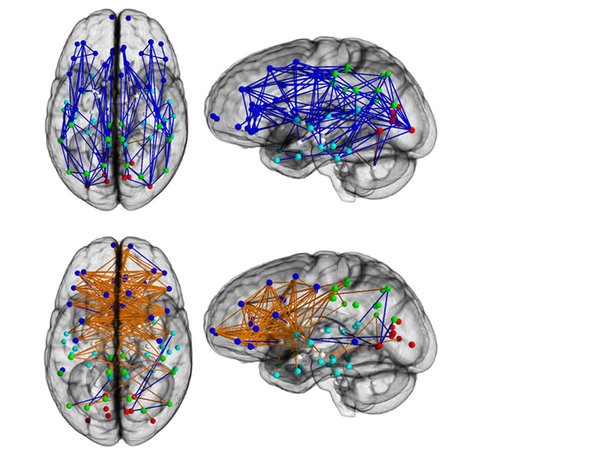
Male and Female differs in their Hard wiring Brain Structures

There is biology behind the gender gap, a study suggests. Male brains, above, show more connections within hemispheres, in blue, while inter-hemisphere connections, in orange, were more prevalent among females, below in the picture above.


A map of the human brain may in fact be a two-volume edition, divided by gender, according to a new study that found significant differences between how the male and female brains are hard-wired.

Males tended to have have stronger front-to-back circuits and links between perception and action, while women had stronger left-to-right links between reasoning and intuition, according to University of Pennsylvania Perelman School of Medicine researchers who imaged the brains of 949 adolescents and young adults.

hard wire differences

Their maps of the brain’s so-called connectome, published online Monday in the journal Proceedings of the National Academy of Sciences, matched observed behavioral differences between the sexes. Women did better at tests of attention, word and face memory and cognition. Men did better on spatial processing, motor skills and sensorimotor speed.

The results lend weight to growing evidence that humans have formed strong adaptive complementarity, suggesting that biological evolution predisposes the species to divide gender roles. That implication is sure to fuel debate over the roles of nature versus nurture and the interplay of function and structure within the human brain. But they also could inform treatment of neurological disorders known to vary by age and sex, such as autism and schizophrenia.

“There is biology to some of the behavior we see among men and women,” said Ragini Verma, a University of Pennsylvania biomedical imaging analyst and lead author of the study.

“In the population, men have stronger front-back connectivity, and women have inter-hemispheric or left-right connectivity more than the men. It’s not that one or the other gender lacks the connectivity altogether, it’s just that one is stronger than the other,” Verma said.

That means men may be quicker on the perception-action path, while women better integrate the analytic side of the brain with the intuitive and social side.

“So, if there was a task that involved logical and intuitive thinking, the study says that women are predisposed, or have stronger connectivity as a population, so they should be better at it,” Verma said.

“For men, it says they are very heavily connected in the cerebellum, which is an area that controls the motor skills. And they are connected front to back. The back side of the brain is the area by which you perceive things, and the front part of the brain interprets it and makes you perform an action. So if you had a task like skiing or learning a new sport, if you had stronger front-back connectivity and a very strong cerebellum connectivity, you would be better at it.”

Researchers used diffusion tensor imaging, a tool that can indirectly outline the path of myelinated axons, the “wire” section of neurons that facilitate long-range conduction of electrochemical signals and are part of the brain’s white matter. They looked at the brains of 428 men and 521 women, ages 8-22, who are part of a larger, long-term study known as the Philadelphia Neurodevelopmental Cohort, conducted with the Children’s Hospital of Philadelphia.

In the upper parts of the brain, the men had greater connectivity within hemispheres, while women had greater connection between sides, the study found. Women also tended to have more connections among smaller-scale “modules,” while men had stronger connections within those subregions.

In the lower part of the brain, the cerebellum, men had stronger connections between hemispheres, giving them a possible edge at translating perception to motor skills. Women had more interconnections across the frontal lobes, the study found.

The differences in the connectome have come to be called the hunter versus gatherer divide by two of the study’s main authors, the husband-wife team of Raquel and Ruben Gur. And the data jibe with findings from a 2011 UCLA study of twins that found women had stronger inter-hemispheric connections in several subregions of the frontal cortex.

“They confirm a couple of our findings, which is very exciting,” said Neda Jahanshad, lead author of the UCLA study, who is now working at USC’s Keck School of Medicine. “This is interesting on a variety of levels because there have been sex differences noted among those with autism, for example.”

Men outnumber women by a 4-1 proporton among those diagnosed with autism spectrum disorder.

Although such sex differences are important to the study, the Philadelphia cohort, funded by the National Institute of Mental Health, was aimed predominantly at studying how brain maturation affects psychiatric disease.

By age, differences between male and female brains become sharp around adolescence but abated somewhat in young adulthood, the study found.

Researchers cautioned that the imagery is an indirect measure of axons, not a cell-by-cell census and map. And the results are strictly statistical averages, although in a very large sample.

Individuals can vary widely by gender, something that Verma said she knows well. She earned several advanced analytical math degrees, a heavily left-brained accomplishment. But she has a rough time navigating by cardinal directions, relying instead on memory and landmarks.


Sunday, January 24, 2016

Harvests Light From The Sun,Moon and Clouds!

In 2012, Inhabitat featured an invention that promised to turn the world of solar power generation upside down. Rawlemon‘s spherical solar energy-generating globe looked a lot like a giant glass marble on a robotic steel frame, but there was nothing raw about what it achieved: the sun-tracking device was capable of concentrating sunlight (and moonlight) up to 10,000 times–making it 35 percent more efficient than traditional dual-axis photovoltaic designs. Bolstered by the incredible enthusiasm for their first design, the scientists at Rawlemon are back with an updated version–behold the Betaray!

André Broessel, a German architect involved with Rawlemon, told Inhabitat in an email that “…our first prototype, the Micro-track, was studied in the german laboratory Zentrum für Sonnenenergie-und Wasserstoff-Forschung Baden-Württemberg and the results are more than optimistic.”

The initial globe design harvested up to 70% more solar energy than photovoltaic panels by using dual axis tracking. The sphere can be used to harvest sunlight for electricity or thermal energy, it can be fully integrated into the walls or ceilings of a building, and it suffers no weather impact. And, because it’s basically just a big crystal ball, it guarantees at least 99 percent transparency.

The solar sphere was a finalist in the World Technology Network Award 2013, which gave the Rawlemon team motivation to keep investigating, and now they’ve produced a second iteration, the Betaray, that’s even more polished than the last. The Betaray is designed to concentrate diffuse light and generate a powerful beam of solar energy. The Betaray can harness solar energy from the sun, the moon, or even the gray sky of a cloudy day, whereas conventional PV collectors need 4 times more incoming light before they start producing power.

Friday, January 22, 2016

10 Innovative Technologies going to be a part of Near Future

1. Portable laser pens that can seal wounds

Imagine you’re hiking fifty miles from the nearest human, and you slip, busting your knee wide open, gushing blood. Today, you might stand a chance of some serious blood loss — but in less than a decade you might be carrying a portable laser pen capable of sealing you back up Wolverine-style.

2. Artificial Gills

Think Aquaman (Although, we are not quite sure how he is useful). Just like flying; the capability of breathing underwater is one of those things that we have all wanted. Israel based inventor Alon Bodner has come up with a prototype; LikeAFish (that’s one smart name) which allows humans to breather underwater by generating oxygen from the water like the gills of a fish. The current issues are that of size and weight, however, progress is being made quite rapidly to overcome these issues.

3.Insect-sized robot spies

They aren’t far off from becoming a reality, with the military currently hard at work to bring Mission Impossible-sized tech to the espionage playground. Secret weapon: immune to bug spray.

robot flies of insect size that can spy
4. Sunscreen Pills

Sun is good but too much of sun is bad and that’s why we have sunscreens. However, as is with humans we just can’t stop improvising stuff and now we want sunscreens that can be administered orally. So what we are looking for is a tablet, which we can take and then walk around in the sun while being protected. Good news folks; a study is being carried out at King’s College (London) and according to Dr. Paul Long who is the head of this three year project; ‘There would have to be a lot of toxicology tests done first but I imagine a sunscreen tablet might be developed in five years or so. Nothing like it exists at the moment.’

5. Tooth Regeneration

Going to the dentist is one of the most terrifying experiences. However, it is also one of the most crucial ones. Why is that so? Because if you damage your teeth then the damage is permanent and you’d have to live with that for the rest of your life. Yeah, that’s old new. The newsflash; scientists are working on to how to regenerate human teeth based on alligator’s system of regeneration, which comes into play when the tooth is damaged or lost. According to a study that was carried out in a lab at UTAH back in November 2012, humans can also regenerate teeth based on this alligator’s system in a lab with some modifications.

6. Light Peak

technology, a method of super-high-data-transfer, will enable more than 100 Gigabytes per second — and eventually whole terabytes per second — within everyday consumer electronics. This enables the copying of entire hard drives in a matter of seconds, although by this time the standard hard drive is probably well over 2TB.

7. Energy from a fusion reactor


It has always seemed just out of reach. It’s essentially the process of producing infinite energy from a tiny amount of resources, but it requires a machine that can contain a reaction that occurs at over 125,000,000 degrees. However, right now in southern France, the fusion reactor of the future is being built to power up by 2019, with estimates of full-scale fusion power available by 2030.

8. Holographic TV

This is more than just exciting; the future holds holographic television instead of your LEDs or extra HD TVs. The next generation of TV won’t be about the screen size and quality but rather about viewing area. MIT researchers have created a chip which is able to render a holographic display as good as real world – 50 Gigapixels per second. The cost of such TVs would be too high, that’s the general opinion, but Michael Bove, MIT’s Object based Media Group disagress; ‘The technology itself is one that’s easy and inexpensive and, as far as we are aware and Nature is aware, has never been applied to displays before.’ According to his speculations such TVs will be available in the next ten years or so.

holographic screen a reality

9. Wireless Electricity
Among many fantasies that the mankind has, wireless electricity sure has earned its place. However, you would have to give this fantasy up because this is soon going to be a reality (about a decade or so). We have seen wireless charging for gadgets and that’s proof enough to build a structure onto. A number of companies are trying to come up with electric ‘hubs’, which will be capable of powering up an entire house. The work is based upon the research done by Marin Soljacic of MIT. The idea is to make use of the fact that some particular electromagnetic waves make it easy to transfer energy and electricity can be transferred between objects that are resonating at the same frequency.

10. Ultra–High Speed Tube Trains

We’ve already covered the Maglev trains here at wonderful engineering, however, let’s take a look at them again. Japan has plans on shifting onto these trains by 2045. Since there are no wheels, hence no contact or friction and Maglev is capable of achieving a speed of 300 mph. The trains are levitated by maintaining an electromagnetic field. However, the idea being put forward by a company based in Colorado is much faster, in fact according to their idea, the travelling shall be done at a speed of 4,000 mph. The company, ET3, has put forward a concept of Evacuated Tube Transport. The track is within a vacuum tube that has been sealed and pressurized. The G-forces which a passenger experiences are comparable to that of a highway ride though. ET3 already has built a prototype capsule and is looking forward to testing it out.

On the Path of Making Digital India through Technology and Innovation

Dream of #Digital India is something that can be accomplished only if technology can shake hands with the lower and middle class people. We all know that today almost 50% of people don’t have access to internet. And many of those don’t even have skills to work on it. Skill development is no doubt the one big target for the digital India campaign but we need to work on the many other aspects as well. Like using technology for economic development and growth.


Providing funds for research and development can help India grow. There is not much scope in career if someone wants to take research as a career option. We need to build that career domain to generate better and innovative ideas.

What we lack is the knowledge of how the digitalized things work. Need to empower students with a subject of latest digital knowledge as a no credit course where the only objective would be to make them aware of what can they do with the knowledge of digital systems. Awareness about latest technical advancements and their future of growth and development as a consumer product is also very important. India is lacking behind other countries in technology by a period of more than 2 years and this gap needs to be filled.


digital India moment


Ways are many such as “if we can setup industries so that the Gadgets that we operate can actually be made in India” will help make India independent. Cheaper electronics like laptops, computers, and tablets will help India grow in digital manner.

E-governance is of great value to the system as it provides an open and transparent window to all the Indians citizens. But we need to provide access to these portals to the lower middle class and middle class people because they constitute the major population in India.

Free courses for the graduates in the field of research can help India grow and stand out as a powerful economy.

India needs a fabrication lab to be established to enable more digital power to flow and generate better products and gadgets within India.

Innovation and creativity are the backbone of the idea of digital India. No doubt India has lots of talent and innovative people but what is stopping them from taking it from innovation to a full fleshed product is the lack of guidance and funding. Proper guidance and funding can help people come forward with new creative thoughts and ideas.

People like Pranav Mistry are making India proud and there are many others like him who need a platform to showcase their creativity and innovative idea.

Technology is something that will bring many other problems related to environment with it as well, so we need to work in the direction of green technology and clean digital India.

Skill development is one of the important factor that will drive the digital India moment forward. Providing job opportunities to as many people as possible will help in building a nation that will create benchmark for development and stability.

Technology and digital information in E-governance can be of help in many sectors. Some of them are:-

“Digital Traffic control”
Having an automated digital speed recorder and cameras to keep an eye on highways can help reduce road rage and accidents.

Having a digital “challen machine” in the hands of the traffic police will avoid the flow of corruption.

“Digital Education”

Providing video-audio tutorials for the skill development in many domains can boost the literacy rate of India and help people learn without any financial constraints.

“High speed data”

Fiber optics promise the consumer with high speed internet data. Need to switch from the conventional Broadband to FTTH technology is required to get the cutting edge speed.

“Digital ticketing system in Public transport”

Ticketing system in India is still of the backward type that consumes lot of time. The ticketing on the paper tickets is also a waste of natural resources. Similar to the IRCTC webportal, if some mobile messaging service can be implemented for the ticketing of the on road public transport, it can be really a big step in the path of digital India.

India has the potential to be what it wants to be and with Intel coming up for help in the realization of the dream to Digital India with initiatives like “Digital Skills for India” and “Innovate for India” , it shows that the dream is not big and we can achieve it.

Intel has joined hands with BSNL as well to share the efforts of making India Digital. And not only this, Intel is continuously coming up with great ideas for making Digital Information accessible to the Indian people easily.

Your turn to tell us what can be the next step in the efforts to make Digital India and as we discussed many ways by which we can realize the dreams, what do you think about them. Do you have any other idea or thoughts that can be a part of Digital Nation? Share with us your viewpoints.

Wednesday, January 20, 2016

Simple Methods to Sharpen your Memory, Improve Retaining Power and Increase IQ level

There are a number of artificial products available in market that advertise the guarantee of Increasing your Memory Power and making you smart. However the reality is different. They give poor results and just cut your pockets. Effects are short term and also affects the human health.

Then how can you improve your memory?

Almonds are the natural elements that have the potential to improve your memory Power.

Almonds contain the mineral zinc that is known to keep up the functioning of your immune system. Zinc is also an antioxidant that fights the free radicals in your bloodstream. These free radicals are responsible for attacking and breaking down brain cells.
In addition to that, almonds are also loaded with nutrients like vitamin B6 which promotes brain health and vitamin E that slows down the ageing of brain cells that impact memory.
The omega-3 and omega-6 fatty acids in almonds help increase intellectual levels and the magnesium in them help strengthen the nerves in the brain.

IQ is the measure of your memory power

According to HighIQPro, the average IQ is between 90 and 109, with 50 percent of the population falling into this range. The low average is between 85 and 89 (23 percent fall into this range). The high average is between 110 and 115 (25 percent fall into this range).
IQs ranging from 115 to 129 are considered high IQs, with approximately 15 percent of the population falling into this range. An IQ of 124 or higher is required in order to join the International High IQ Society. Someone with a “gifted” IQ has a score of 130 or higher (2 percent of people fall into this category). A gifted IQ is required in order to join Mensa. An IQ of 140 or higher is considered highly gifted, but only 0.4 percent of the population test in this range, according to HighIQPro.

Try to improve this score.

how to Improve memory simple steps
High IQ is possible for everyone. Improve Brain power

Meditation

One of the best methods that have been proven by science and technology to be the source of High IQ and Excellent Mental Health. It helps is improving both the sides of your brain i.e. right brain and left brain. The right brain is very much responsible for …… and left brain is more of the ….

Meditation improves your concentration power and hence you are more focused on your job. Whenever you come across any thing in life and you have full concentration on that then that thing or knowledge gained gets stored in your back brain which is the ROM part of your brain.

Home remedies

Drinking water kept in a bronze/bronze/copper coated glass or vessel helps in improving memory.

It stimulates your brain: Our brain works by transmitting impulses (or orders) from one neuron to another through an area known as the synapses. These neurons are covered by a sheath called the myelin sheath that acts like a sort of conductive agent – helping the flow of impulses. How does copper figure here you ask? Well, copper actually helps in the synthesis of phospholipids that are essential for the formation of these myelin sheaths. Thereby, making your brain work much faster and more efficiently. Apart from that copper is known to have brain stimulant and anti-convulsive properties (prevents seizures), that do a world of good for your brain.
As you probably know, most of your body is water. It is very easy to not consume enough water and become dehydrated. Being even slightly dehydrated decreases your mental energy and can impair your memory.

Sleeping Habits

Sleeping for more than 7 hours a day makes your body and mind lazy which reduces your retaining power. According to various surveys and researches it is found that people who sleep for more than 8 to 9 hours are more creative but have weak memory.

Overburden

A normal human being can concentrate for not more than 6 to 7 min continuously. So never overburden your brain with forced concentration. Try to take small break and then again concentrate on work. This will help you in memorizing things in a more better way. For example if you are trying to study for more than 1 hour continuously then don’t do that. It is not advisable since you won’t be remembering everything for longer. It will last for very small duration. To retain what you study, it is advisable to study with small breaks in between.

How to learn and remember things

Try to learn anything by writing it and speaking it at the same time. Yes it is true that this practice helps you remember that thing for longer periods. Your brain captures the sounds from your vocal cord as well as the picture from your eyes. When these two things are matched in your brain your brain feels more connected to that and hence you remember that thing very easily.

Antioxidants – Shield for Brain

As we age, substances in our bloodstream known as “free radicals” attack and break down our brain cells. If you don’t fight this, you are likely to experience age-related memory loss when you get older.
Fortunately, there are a lot of foods that contain a helpful substance called antioxidants. These antioxidants merge with the free radicals in your blood and make them harmless. So it pays to eat lots of antioxidant foods every day.
Good sources of antioxidants for your brain include tea (especially green tea), blueberries and other berries, red grapes, tomatoes, broccoli, garlic, spinach, carrots, whole grains, and soy. Asparagus is one of the best sources of glutathione, the “superhero of antioxidants”.
Many of the high-fiber brain foods are also high in magnesium. A diet lacking adequate magnesium puts you at increased risk of age-related memory loss.
So there you have it. To keep your brain healthy and your memory at its best, simply start eating foods from all of these groups on a regular basis.
Slowly replace the high-sugar, high-fat foods in your diet with these healthy brain foods. Not only will your brain and memory benefit, but your body will, too. I guarantee you will notice a difference!

Tuesday, January 19, 2016

Discover Drones Capturing our Bright Future

Unmanned aerial vehicles (UAVS), also known as drones, are aircraft either controlled by ‘pilots’ from the ground or increasingly, autonomously following a pre-programmed mission. While there are dozens of different types of drones, they basically fall into two categories: those that are used for reconnaissance and surveillance purposes and those that are armed with missiles and bombs.

The future of drones is very attractive and we cannot deny from the fact that soon we will be using them for many purpose like transporting medication to areas not reachable via road, to do investigation or keep an eye on anyone in particular. Many SCI-FI movies have actually used drones but not the real ones.

But this may soon be a reality. We may be able to actually purchase one for our personal use. One such new drone design is such that it can be easily wear on wrist and used to take selfie.
drone on your wrist to take selfie
The miniature drone is worn like a regular watch, wearable Gadget style. Wrapped around your wrist the device can be called upon to do a few small tasks. With an accompanied mini-cam the quickest idea that comes to mind is a mini-drone for super selfies.

This concept of Wearable quadcopter that can follow you to take selfies and return to your wrist has won $500,000 prize in the INTEL “make it wearable contest”. The design is named as “The Nixie”. The wearable drone was created by researchers at Stanford University and a working prototype of the same was displayed.
Nixie is a drone, worn on the wrist and expands at the touch of a button. It flies off, filming its owner using a camera, and tracking their movements.
Nixie drone on wrist for capturing pictures in air
Called Nixie, the drone folds up and attaches to a wrist strap, and is the world’s first wearable drone. When the wearer wants it to start filming, they press a button and the drone unfolds and flies overhead, tracking their movements using motion sensors. The drone then returns to the wearer’s wrist, which could be controlled using a timer, or summoned using gestures.

They said that they have all the core functionality of the drone and they have solved all of the hardest challenges and have stable wristbands that can unfold and are stable in flight, and the toughest part which is navigation is solved.

They say that having half a million dollars in hand now we are working to make it real and cost effective. They say that the final product will be ‘safe, beautiful and intuitive’.
‘Nixie is in development. Stay tuned!’

We all know drones can deliver death on the battlefield, but might they also soon be delivering presents to your door? Amazon.com is counting on it, thanks to the online retail giant’s no-longer-secret “Octocopter” package delivery project.

This is not the only drone that is creating buzz around. After amazon.com announced that soon they will be delivering products around the city with the help of drones, many other have started focusing on drone robotics work and have come up with some great ideas from all around the world. There are now drones that can fire some shocking wires to capture a running thief or burglar.

Drones that can actually look after your house when you are away are also in development phase. Soon we might find ourselves surrounded by different types of drones and we may be controlling one for some purpose as well.

Drones can charge into the heart of a storm without risking human life and limb. That’s one reason NASA, the National Oceanic and Atmospheric Administration (NOAA), and Northrop Grumman teamed up on a three-year, $30-million experiment to use long-range Unmanned Aerial Vehicles (UAV) to spy on storms as they evolve.

Military drone manufacturers are looking for civilian uses for remote sensing drones to expand their markets and this includes the use of drones for domestic surveillance. Drones will no doubt make possible the dramatic expansion of the surveillance state. With the convergence of other technologies it may even make possible machine recognition of faces, behaviours, and the monitoring of individual conversations. The sky, so to speak, is the limit.
Search and Rescue operations via drone 
Search and Rescue
SAR missions are time-consuming, expensive, and often dangerous for the people involved. The use of well-equipped drones is increasing for SAR and could soon become a standard way to cover large areas of inaccessible terrain, even at night.

The use of drones has grown quickly in recent years because of various advantages it offers to us.

1. Unlike manned aircraft they can stay aloft for many hours (Zephyr a British drone under development has just broken the world record by flying for over 82 hours nonstop)
2. They are much cheaper than military aircraft.
3. They are flown remotely so there is no danger to the flight crew.
4. They can be easily programmed to do any particular task and follow any particular person.
5. A single Drone can be used for multiple purposes and can act as a spy as well.
6. There small size and capable of caring advanced technology.